How To Use Dermestid Beetles for Professional Bone Cleaning?
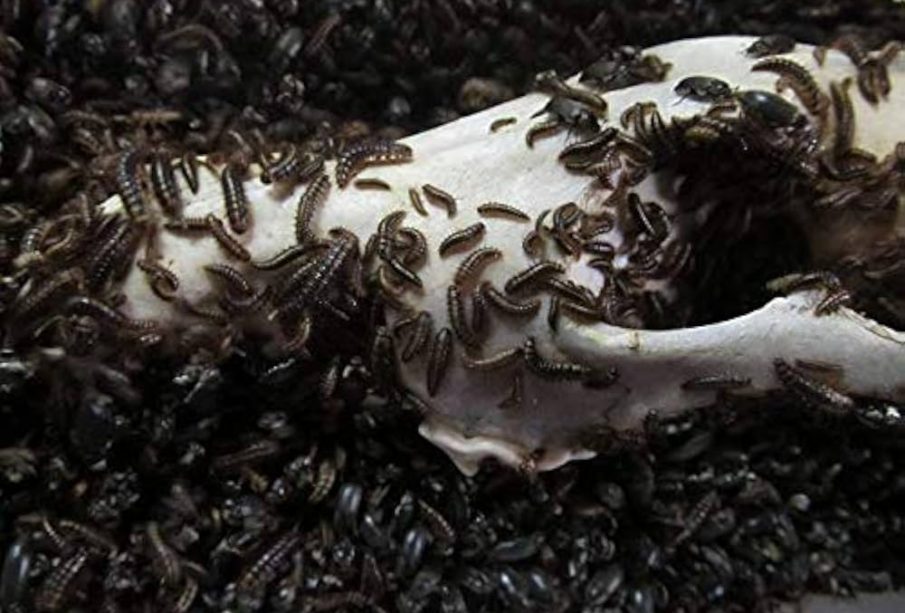
Dermestid beetles are used to clean bones and skulls. It is an effective technique to clean those that are difficult to dissect by hand. Therefore, museum curators and other related people Buy Dermestid Beetles to consume muscle, ligaments, and soft tissue. This causes no damage to the skeleton itself. By eating the leftover flesh on bones, they help clean them in taxidermy and forensic applications.
Use these procedures to build the ideal dermestid beetle cage for effective skull cleaning and taxidermy:
- Use dermestid beetles to remove the meat.
- Degrease the skull.
- Make sure the skull has been well cleaned.
This post will explain how to grow your own colony of dermestid beetles, which are a helpful method for cleaning bones, particularly those areas of the skeleton that are challenging to dissect by hand. To avoid bubbles on connective tissue, apply paint or weaker solutions (no more than three) on the bird and wash it off right away.
The skull should be cleansed with a brush after being submerged in water and treated with hydrogen peroxide. When it’s ready, the beetles are revitalized to consume the remainder.
Skull Cleaning Dermestid Beetles
Can You Clean Bones with Dermestid Beetles?
Dermestid beetles are a safe and effective way for museum curators and wildlife officials to clean bones. They support the use of these beetles to remove tissue, emphasizing their superiority over alternative techniques that run the risk of causing harm to bone structures. Dermestid beetles may completely clean bones without breaking or separating them because they are skilled at eating soft tissue.
These insects, which are members of the Dermestidae family and are commonly referred to as skin or carpet beetles, are vital for jobs like taxidermy where preserving the integrity of skeletal systems is key.
A colony of at least 300 beetles is required for efficient skull cleaning; larger specimens may require up to 5,000 larvae. In just a few days, their fast eating habits can leave their bones immaculate. Other cleaning techniques, such as boiling, might cause problems and jeopardize the stability of fragile bones. Because of their careful nature, dermatid beetles—especially their larvae—are excellent at cleaning small bones.
Taxidermists benefit from the fact that these beetles not only make tracking specimens easier, but they also act naturally by eating any leftover meat. To start, the beetle colony must be properly cared for and maintained for best results.
Dermestid beetles play a crucial role in the preservation of vertebrate remains and are a useful substitute for manual dissection techniques in forensic work and taxidermy.
How Do Dermestid Beetles Maintain Skeletons?
When compared to traditional methods, dermestid beetles are efficient at cleaning vertebrate skeletons and skulls while maintaining fine details and cutting down on cleaning time. Because they eat decomposing flesh, these insects are known as “skin beetles.” They carefully eat tissue while preserving delicate bone structures.
Because of their effectiveness, they can clean several specimens at once, producing superior skeletal preparations preferred by educational institutions and museums.
In particular, the species Dermestes maculatus has been used for more than a century as an economical and sustainable method of cleaning skeletons. Dermestid beetles help to keep skeletal remains intact, which facilitates monitoring and reduces losses, compared to many techniques that disarticulate bones.
In a matter of days, they can completely clean a specimen while preserving even the smallest features, such as sutures. The right conditions, such as shelter, substrates, and regulated temperature, are essential for the successful maintenance of a dermestid colony.
Cleaning the colony every two to three months is necessary for routine upkeep. Museums benefit from these beetles’ powers, using them for a range of animal sizes, from birds to mammals, with a usual duration of up to two weeks for some species.